Custom Packaging Solutions by Industry: Which Box Fits Your Product?
An Industry-by-Industry Guide to Custom Packaging: Understanding How Cosmetics, Food, Electronics, Retail, E-Commerce, Gift, and Apparel Products Require Different Boxes, Materials, and Finishes.
2026/11/19
Reading volume: 0
News Details
One box does not fit every product. A cake needs a grease-safe surface. A phone needs a snug insert. A perfume box needs a clean finish. This guide explains how packaging changes across industries. It helps global buyers pick a structure that protects the product and supports the brand.
Start with the product, not the box. Write down size, weight, and how the item will be sold. Then match it to the right structure. The sections below cover the most common markets. They also show where a custom white card color box fits best.
1. Why Industry Changes the Box
Packaging has two jobs. It must protect the product and help it sell. Different industries balance these jobs in different ways. A food box focuses on safety. A gift box focuses on presentation.
White card board holds print well. It suits light goods that sit on a shelf. Corrugated board adds strength for shipping. You can see how structures vary across our product range.
2. Cosmetics and Skincare
Cosmetic packaging boxes sell the look as much as the product. Brands use clean white board and soft finishes. Matte lamination and spot UV are common. Inserts hold bottles in place and stop knocking in transit.
Keep print colors accurate. A wrong shade can damage trust. Ask for a printed sample and check it under daylight. Small details, such as a neat closure, shape how buyers judge the product.
3. Food and Bakery
Food packaging boxes must use safe materials. Ask for food-contact test reports. Grease-resistant board works for bakery items. Window boxes let buyers see the product before they buy.
Do not assume every paper is food grade. Ask for the document, then check the scope. Match the board to the product. Frozen, oily, and dry foods each need a different surface.
4. Electronics
Electronics packaging boxes focus on protection. Devices and accessories need inserts that stop movement. Corrugated board absorbs shock during transit. Print should stay clean and simple.
Test the pack with a drop or vibration check if the product is fragile. An insert that fits well often matters more than a thick outer wall.
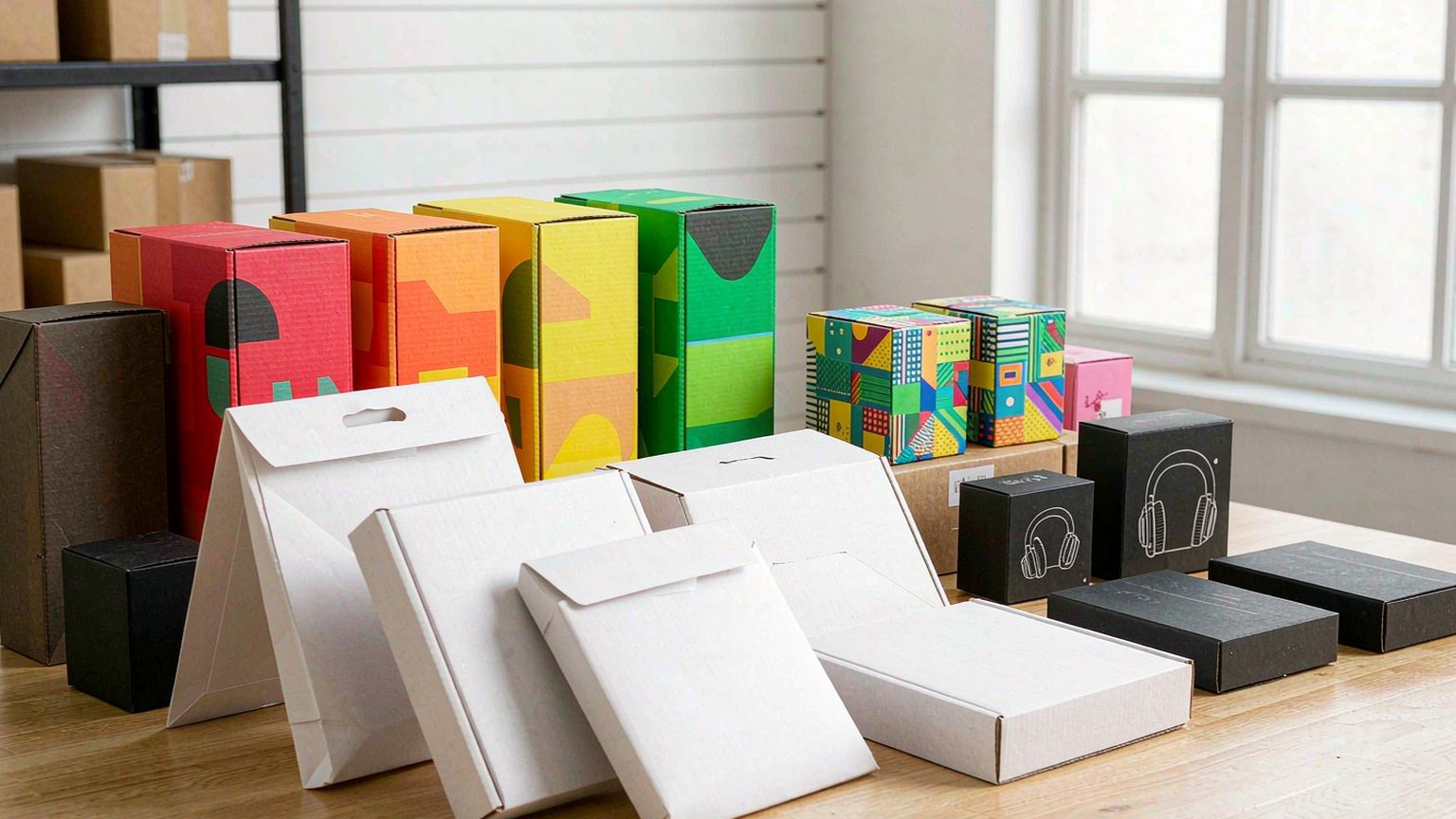
5. Retail and Shelf Display
Retail packaging boxes compete for attention on the shelf. Color, shape, and finish all matter. A clear brand mark helps buyers find your product fast. Keep text short and readable.
Think about how the box will stand. A display box may need a special base. Check that the design still works when the box is filled and closed.
6. E-commerce and Subscription
E-commerce mailer boxes must survive courier handling. Self-locking designs save packing time. Branded inside print adds to the unboxing moment.
Right-size the box. Extra empty space raises shipping cost and damage risk. Seal the box well so it arrives neat.
7. Gifts and Premium Goods
Gift packaging boxes create a sense of occasion. Rigid two-piece boxes and magnetic styles feel substantial. Foil stamping and embossing add detail.
Match the finish to the price of the product. Over-packaging a low-cost item can hurt your margin. A tidy fit often looks more premium than extra layers.
8. Apparel and Fashion
Apparel packaging boxes protect fabric and carry the brand. Flat mailer boxes suit clothing. Tissue paper and a simple logo create a clean look.
Keep the box light to control shipping cost. Choose a finish that does not scuff the garment inside.
9. Small Businesses and New Brands
Custom packaging for small businesses is easier than many buyers think. Many factories accept a low trial order. Start with one box style and one finish. Grow the range as sales rise.
Ask about shared plate costs and sample fees. A clear plan keeps the first order affordable. Read more ideas on our Blog.
10. How to Choose Your Industry Solution
Use three steps. First, define the product and how it is sold. Second, pick a structure that fits the risk level. Third, choose print and finishes that match the brand and budget.
- Fragile goods: prioritize protection and inserts.
- Food: prioritize safe materials and documents.
- Retail: prioritize print and shelf presence.
- Gifts: prioritize structure and finish.
Industry is a starting point, not a fixed rule. Size, weight, and route to market also shape the choice. If you want advice on a specific market, you can contact us. You can also learn more on our About Us page.
The right box starts with the right question. Ask what the product needs, then match the structure. A good fit lowers damage, controls cost, and builds the brand. That matters in every industry.
Share to:


