How to Choose a Custom White Card Color Box Supplier: A B2B Buying Guide
Buying a custom white card color box requires clear specs, supplier comparison, sample verification and production planning. This guide helps you avoid common sourcing mistakes and get accurate pricing.
2026/11/19
Reading volume: 0
News Details
Sourcing packaging for a bulk order can feel risky. You pay before you hold the final boxes. A weak supplier can miss your deadline or print the wrong color. This guide gives you a clear path. You will learn how to write a brief, compare quotes, check samples, and confirm quality. It is written for buyers who need a custom white card color box for resale or for their own products.
1. Start With a Clear Product Brief
Good quotes start with clear input. Write down your needs before you contact any factory. Include these points.
- Inside and outside size in millimeters.
- Box style, such as a tuck end, mailer, or two-piece lid and base.
- Board type and thickness.
- Print colors, logo position, and artwork file format.
- Finishing, such as lamination, spot UV, or hot stamping.
- Order quantity and delivery country.
Send the same brief to each supplier. Then you can compare answers fairly. A vague request leads to a vague price.
2. Know Your Materials and Box Styles
A white card box uses coated paperboard. It holds print well and suits retail shelves. A corrugated color box adds a fluted layer. It resists pressure and works for shipping.
Choose the box by how you will use it. Light cosmetics often use folding cartons. Heavy goods need corrugated board. You can browse the full product range to compare structures.
Ask the factory which board grades it can supply. A real maker will name the paper and the flute. A trader may only say "standard."
3. How to Choose a Packaging Supplier
Price is only one part of the decision. Use these checks to judge a supplier.
- Ask who makes the boxes. A direct factory controls quality and timing better.
- Request a video of the production line. A short walk-through tells you a lot.
- Check business licenses and certificate numbers.
- Read the quote scope. Confirm what is included and what is not.
- Ask which markets the supplier already serves.
Our guide on how to choose the right paper packaging explains material choices in more depth. You can also read more on our About Us page.
4. Check Samples Before You Order in Bulk
Never skip the sample stage. A physical box shows what a photo cannot. Check the board stiffness, the fold lines, and the print color under daylight.
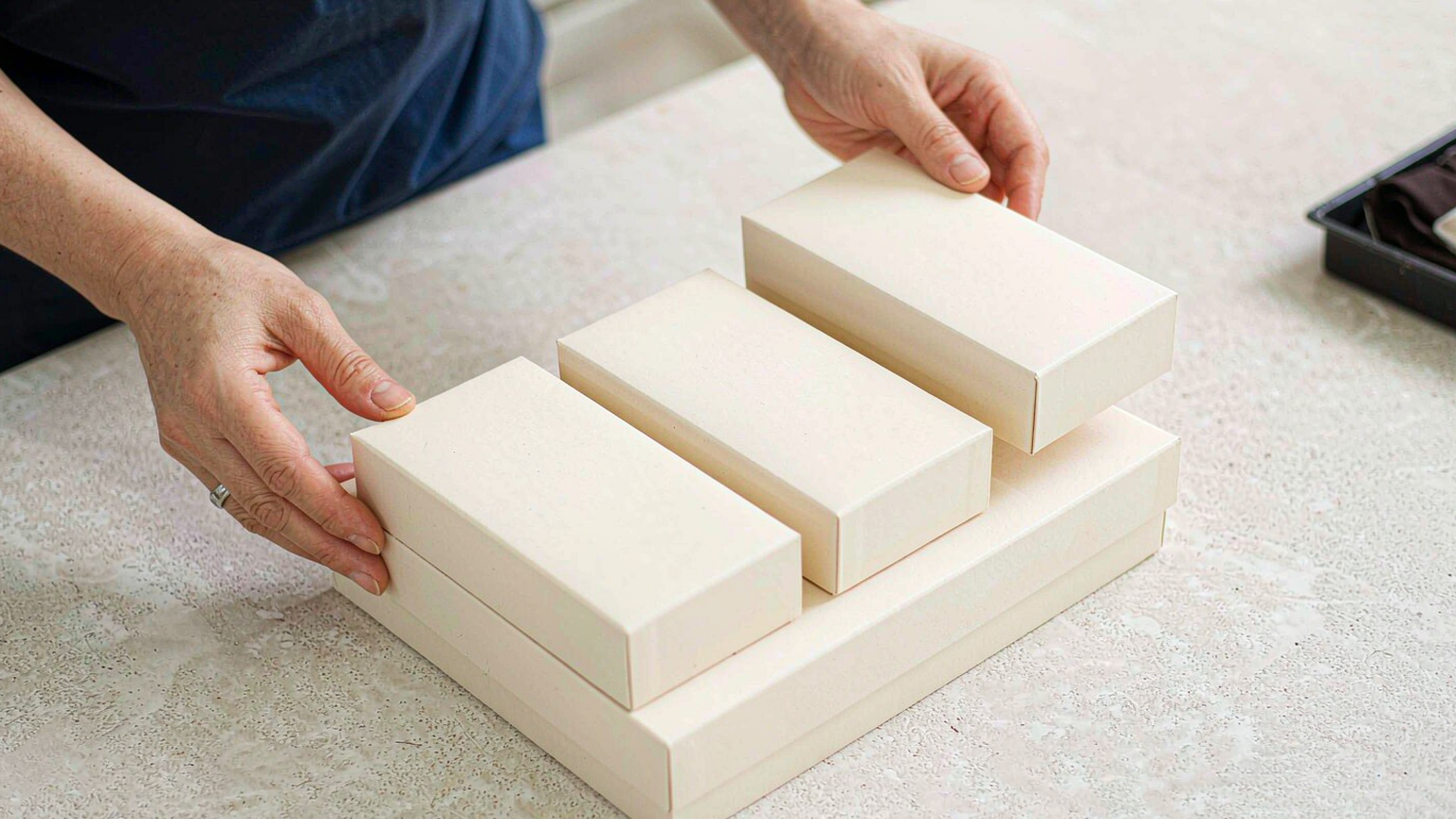
Ask for a printed sample, not a blank one. Approve it in writing. Keep one signed sample as your golden sample. Both you and the supplier should keep a copy. This solves most disputes later.
Confirm how the supplier handles finishing crafts such as foil and embossing on the sample.
5. Understand MOQ and Unit Price
MOQ means minimum order quantity. Many factories set a lower MOQ for white card boxes than for rigid boxes. Ask if the MOQ applies per size or per design. One design with three sizes may count as three orders.
Unit price drops as volume rises. But do not chase the lowest number. A thin board may cut the price and raise your damage rate. Compare quotes on the same brief and the same board.
Ask about setup fees, plate fees, and sample fees. Get all costs in one written quote.
6. Ask About Quality Control
Reliable supply depends on quality control. Ask what checks the factory runs. Good answers include incoming paper checks, print color checks, and a final inspection before packing.
Request the tolerance for size and color. Ask how the factory handles a wrong print. A clear answer shows a real process. A vague answer often means problems later.7. Look for FSC Certified Paper Boxes and Proof
Many buyers now need proof of responsible sourcing.
FSC certified paper boxes
show that the fiber comes from managed forests. Ask for the certificate number and check it. Do not accept a logo alone. Other useful documents include ISO 9001 and food-contact test reports. Ask only for documents that match your market. Extra certificates do not always add value.8. Plan Lead Time and Shipping
Lead time includes artwork approval, sampling, production, and transit. Ask for each stage in days. A supplier who gives one number may be hiding delays.
- Confirm the print method and its run time.
Print and finish shape how your brand looks. Offset print suits large runs. Digital print suits small runs. Ask which one the supplier uses.
Common finishes include matte lamination, gloss lamination, spot UV, and hot stamping. Each adds cost. Choose finishes that match your product and budget.
10. A Simple Final Checklist
Before you place the order, confirm these points in writing.
- Size, style, board, and print are signed off.
Share to:


